Resumo
In December 2022, Fleury Group, a leading player in Brazil’s supplementary health sector, reached a pivotal moment under the leadership of Dr. Jeane Tsutsui. Despite achieving record revenue and a successful merger with Hermes Pardini, Fleury faced growing competition in an industry rapidly consolidating through vertical integration. The merger positioned Fleury as a major force in diagnostic medicine, but it also brought challenges. With the supplementary health sector increasingly dominated by health plan operators and hospitals leveraging alternative payment models, Fleury needed to redefine its role in the value chain while maintaining its diagnostic excellence. The case presents students with the complexities of navigating an inflationary environment with a high cost of capital and increased regulatory scrutiny, all while pursuing value capture strategies. Fleury’s strategic roadmap involves balancing its core diagnostic business, expanding new services (from primary care to low-complexity surgeries), and scaling its digital health platform, Health iD. However, with rising costs and shifting market dynamics, the case challenges students to evaluate Fleury’s options: should the company continue to pursue an ambitious growth strategy, or focus on consolidating its core business to protect margins? Students are asked to assess Fleury’s future in a rapidly changing ecosystem, considering how the company can sustain its growth while enhancing operational synergies. This case explores strategic decision-making in the face of external pressures, providing insights into value capture in a highly competitive health sector.
Resumo
In June 2021, the founding partners of Method Advanced Logistics (henceforth Method) met with Maria Bonvehí, their IT director, to discuss some issues they were having with their customers; a series information system problems risked causing an operational collapse. Method was using a SaaS solution that, while specifically designed for the goods transportation sector, wasn’t meeting its customers’ needs. They had to decide whether to change their SaaS, create an in-house application, or develop a hybrid solution by pairing their current SaaS with a customer web portal. A decision was needed urgently; Maria urged the partners not to delay. They were aware that this was a strategic decision that would shape the coming years. If they made the wrong decision, it could affect their ability to grow and compete. This had to be a strategy for the future, not a temporary fix for the current issues.
Resumo
The Challenge of Administering 75,000 Vaccinations is a case that explores the decision-making process around how to manage a time-constrained mass vaccination program. The example used is a mass vaccination program that took place in Bogota, Colombia between June and December 2021, and had to administer 75,000 vaccinations in three months to vulnerable populations in three localities. The process would be managed by one of Colombia’s leading private universities, Universidad de los Andes (Uniandes). Ángela Rodríguez and Natalia Vega had two days to make an operational decision on whether Uniandes should directly execute the process using its own resources, whether to outsource the process to Médicos de Emergencia, a strategic partner that did not have process experience, or whether to outsource the process to a company with mass vaccination experience that the university had not worked with before, and that demanded autonomy. A decision had to be made quickly; each minute of inaction was making it harder to achieve the target.
Resumo
O caso centra-se em Faan van der Walt (como protagonista), no seu irmão Dirk e na WeBuyCars, um grande concessionário de automóveis em segunda mão na África do Sul, que se tornou um operador dominante no mercado através da exploração dos princípios do oceano azul. A WBC é um concessionário de automóveis em segunda mão na África do Sul, fundado por dois irmãos em 2001. A empresa conseguiu prosperar num sector pouco atrativo, concentrando-se, em primeiro lugar, no espaço entre dois mercados (vendedores privados de veículos e concessionários) e, mais tarde, expandindo-se para actividades e mercados complementares. Ao introduzir actividades que acrescentavam valor para os clientes e ao eliminar os custos de transação para os clientes, a WBC criou um mercado de oceano azul para três segmentos de clientes diferentes: vendedores de automóveis, compradores privados de automóveis e concessionários que compram automóveis. A WBC tem tido um enorme sucesso no mercado sul-africano de automóveis usados; possui uma marca extremamente poderosa e de confiança e detém uma quota de 8%. Desde a sua criação em 2001, a WBC registou um crescimento médio anual de 50 a 60% nos últimos 19 anos.
Resumo
James Reid, the newly appointed GM of Troubled Spain, has been given a mandate by the CEO of Troubled Inc. to turn the subsidiary around within six months. Troubled Spain has experienced several years of poor performance that cannot be explained by either sluggish demand or lagging technology. The case provides information about interviews that James had with several employees, describing the role of the employee and giving insights into the issues that they see the company facing. These interviews are complemented by three charts prepared by consultants that James hired to conduct an internal audit of collaboration, communication and informal leadership in the organization. James needs to transform the organization within six months; however, this implies changing relationships that have been developed over decades and clarifying roles and boundaries that have been blurred over many years. The case challenges students to take James’ position and identify the issues of Troubled Spain to develop an action plan in order to address the challenges facing the company. James needs to address: 1) issues concerning Troubled Spain’s formal structure, 2) issues regarding its informal structure, including leadership issues, and 3) issues stemming from the combination of both formal and informal features. Case B provides information about what happened next and may be distributed at the end of the session.
Para ver o caso no sítio Web da HBP, clique aqui
Para ver o processo no sítio Web do Centro de Processos , clique aqui
Disciplina. Finanças
Coleção de casos da Universidad de Los Andes
Resumo
The case describes a capital budgeting dilema for a new the finance of a new product in a technology firm: Swimmer’s headphones. By reviewing a series of emails and attachments, we learn that the protagonist, the recently hired Financial Manager responsible for presenting the decision to the board of directors must construct a capital budgeting valuation model that explicitly incorporates the project risk factors and then make a recommendation to the board.
"Um bom caso permite que o participante viva e aprenda com a experiência de gestão desafiante que é relatada. A publicação de um caso através do CBCC ultrapassou muitos dos obstáculos do processo.A contribuição dos revisores e dos editores, com as suas opiniões críticas, objetivas e profissionais, melhora muito a qualidade do produto".

Leonardo Veiga
Professor de Economia Política no IEEM, Uruguai
"Destaco o processo de revisão pelos pares de outros países, que é extremamente valioso para a melhoria do caso, em particular a compreensão fora do país de origem. Para os participantes, proporciona a segurança de trabalhar num caso que atingirá os seus objetivos de aprendizagem, graças ao rigor no desenvolvimento e avaliação das notas de ensino".
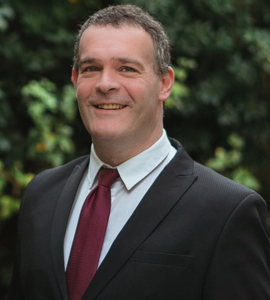
Pablo Sartor
Professor de Análise de Decisão no IEEM, Uruguai
"Os autores têm um intercâmbio muito rico com os revisores cegos".
Enrique Kramer
Professor Universidad ORT Uruguay, Uruguai
Correio eletrônico: cap.adm@uniandes.edu.co
Universidad de los Andes, Bogotá, Colômbia